From Good to Great

Date:

September 30, 2026

Share

The Nucleus Journey Toward Becoming a Great Place to Work

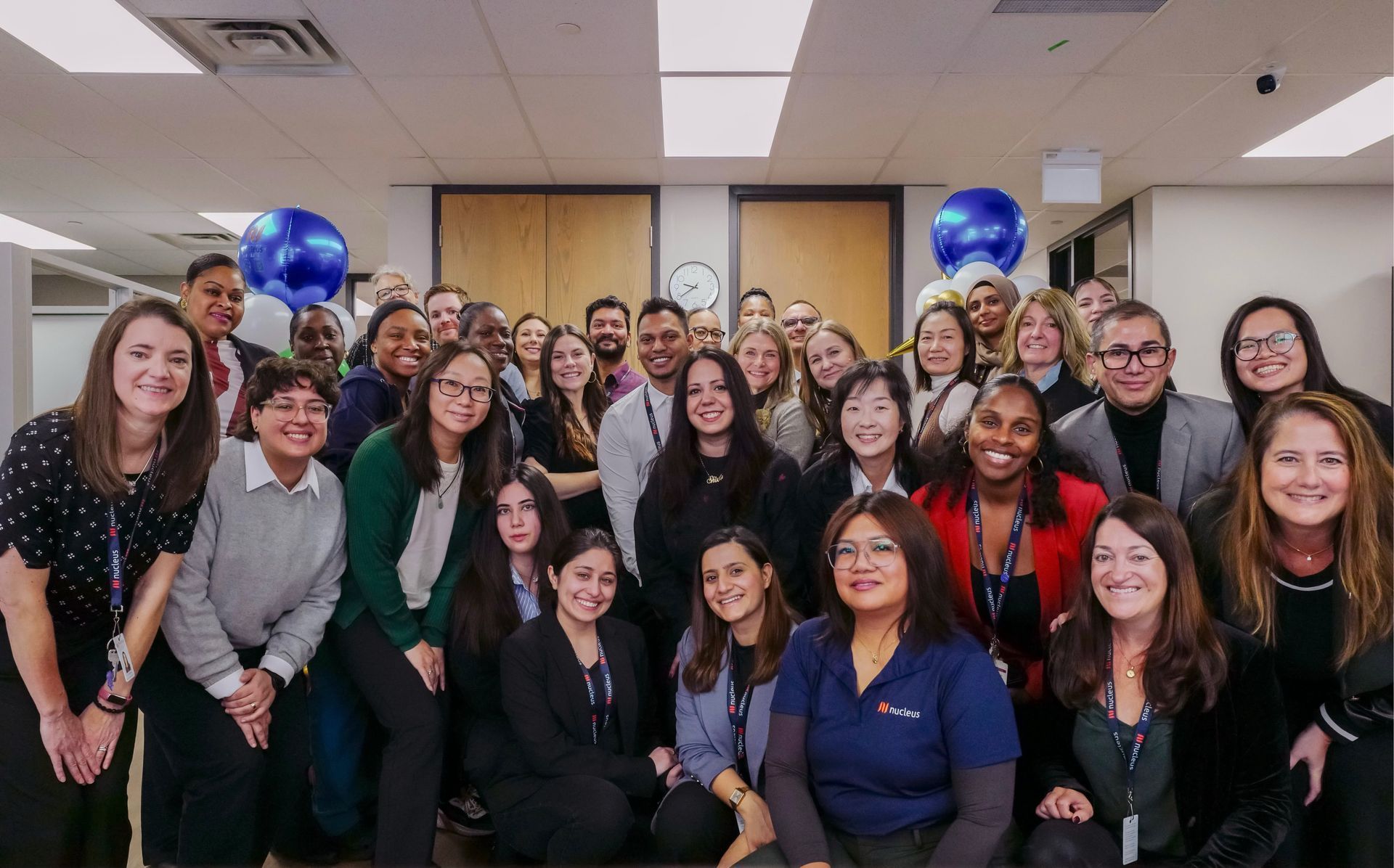
A great workplace is not created overnight. It is built through listening, learning, adapting, and investing in people. For Nucleus Independent Living, becoming a Great Place To Work® was more than a certification, it is a reflection of years of intentional work, collaboration, and commitment to creating an environment where employees feel valued, supported, and empowered.


When our CEO, Laura Salisbury, joined Nucleus in 2020, the organization was navigating an unprecedented time. COVID-19 had created immense pressure across the healthcare sector, and community care providers were facing challenges that extended far beyond day-to-day operations.


“Community care during COVID times felt invisible,” Laura reflects. “You could not advocate enough for the staff or the clients. That invisibility really fueled my thinking and drive to ensure we were seen.”


Coming into Nucleus with experience understanding what high-performing teams and organizations looked like, Laura saw both the strengths of the organization and the opportunities ahead. What followed was a journey of rebuilding, reimagining, and investing simultaneously in people, processes, and systems to create a stronger future for employees, clients, and the communities Nucleus serves both today, and the future.


Building the Foundation for Change

The early journey focused on understanding the root causes behind what the organization was experiencing, from employee turnover and communication barriers to challenges in alignment between leadership and frontline teams.


“It wasn’t about people not caring. It was people running a million miles a minute and feeling like they weren’t getting anywhere.”


Rather than making assumptions, Laura immersed herself in the frontline experience. Early in her tenure, she participated in a "day in the life" alongside long-serving Personal Support Workers (PSW) Beverly Peters, experiencing firsthand the physical and emotional demands of their work.


"At the end of the day, I was exhausted," she recalls. "I understood the challenges of travelling between clients, navigating darkness, unknown winter weather, managing PPE requirements, and balancing the many responsibilities our staff handle every day trying to make a difference in someone’s life, helping them, understanding them, and ultimately, serving them."


The organization began addressing long-standing operational challenges, strengthening communication, improving processes, and creating greater alignment between leadership and frontline teams. Employees were encouraged to share feedback, with over 10 tools introduced to contribute ideas, and help shape the future of the organization.


Creating the Conditions for People to Thrive

A major part of Nucleus’ transformation was recognizing that supporting employees is essential to delivering exceptional care. Laura believes, “Our workforce is changing, and we need to evolve with them, so they can continue supporting our clients”.


The organization focused on creating structures that better reflected the value of the work employees do every day. This included developing a new compensation philosophy, reviewing organizational structure and roles, introducing a better pension plan, enhanced health care benefits, and wellness supports, recognizing the importance of caring for those who in turn, provide care.


This commitment to supporting employees has led to meaningful results. 89 new full-time positions were added from 2020 to 2025, a 187% increase, while our turnover rate declined from 27.9% in 2023 to 13.1% in 2025. These positive trends reflect our ongoing employee-centred approach, supporting more staff with full-time roles that provide stable wages and contribute to economic stability across communities.


Nucleus also invests in building a strong workplace culture through staff events such as a summer BBQ, holiday party, and staff recognition celebration. Annual peer-nominated staff recognition awards celebrate employees who go above and beyond, reinforcing a culture of gratitude and excellence.


These changes are not just operational improvements, they represent a deeper commitment to creating a workplace built on respect, fairness, inclusion, and belonging.


Becoming a Great Place to Work®

When Nucleus began its Great Place To Work® journey, it was important that the organization measured progress from a place of strength, not simply as a response to challenges.


For Laura, becoming a Great Place to Work® could only happen when the organization truly reflected the values it aspired to uphold.


"For the first few years, I couldn't honestly say we were a great place to work," she admits. "If I didn't believe it, I couldn't say it." At the same time “the goal was never just to achieve a certification. It was about creating an environment where employees genuinely felt proud of the work they do and be part of a team that they would go to the ends of the earth for.”


That honesty became a driving force behind the transformation.


The Great Place to Work® process provided an opportunity to listen, learn, and measure progress while gaining valuable insights into the employee experience.


Achieving certification is a meaningful milestone, but it is also a reflection of the countless improvements, creativity, and many and meaningful conversations that have taken place over the past five years.


The result reflects the collective efforts of the entire Nucleus community: leaders, teams, PSWs, and every employee who contributes to our mission to enable adults to live with independence and a high quality of life in their communities, by delivering extraordinary care at home” every day.


Looking Ahead: Continuing the Journey

While Nucleus has accomplished a great deal, the journey is far from over.


The organization is now positioned to build upon a strong foundation and focus on future growth, both for the organization and for its people.


The next chapter will include continued digital innovation, expanded opportunities for employee development, organizational Evaluation, and new ways to strengthen culture and connection across the workforce.


Change will remain a constant.


"Growth requires us to keep learning, adapting, and challenging ourselves," Laura says. “The time is now, for us to have fun creating a future that is meaningful to our clients, our communities, and our staff.”


What remains unchanged is Nucleus’ commitment to people.


That commitment extends beyond our employees to the people we support every day. The strength of our workforce is reflected in the experiences of our clients, with 86% of clients rating their experience as “Good/Great/Excellent”. The journey from good to great has been built on courage, collaboration, innovation, and an unwavering belief that when employees thrive, communities thrive.

And at Nucleus, that journey continues, together.


More Perspectives

October 23, 2026
Over the past four years, Nucleus has moved from using digital systems mainly as administrative tools to using them as part of daily decision-making, service oversight, communication and organizational planning. The shift is not about the tools themselves. It is about how the tools are embedded into operations. “Nucleus has been investing in staff digital literacy, process redesign and change management, recognizing that digital transformation is as much about people and culture as it is about technology. This thoughtful, practical approach positions Nucleus not just to adapt to system changes, but to help shape them,” shared Lori Holloway, CEO, Ontario Community Support Association. “The fundamental change is that Nucleus has shifted from reactive, manual and system-dependent work toward a more proactive, datainformed, digitally enabled operating model. Teams can now monitor and respond to issues – double-booked shifts, scheduling gaps, service-code exceptions, before they become larger problems.” - Shiva Vosoughi, Lead of Digital Health & Privacy A few examples from this year tell the story. 1. The Integrated Decision Support (IDS) platform: administered by the Ontario Hospital Association, gives Nucleus the ability to link internal records with regional data, including hospital admissions and emergency department visits. The result is a sharper picture of clients’ health system journeys and an ability to identify risk earlier. 2. Department-specific dashboards: give frontline managers real-time access to operational and quality indicators. Care Team Leads, Care Coordinators and managers now use data to support attendant performance review, Hospital to Home journey monitoring, scheduling oversight and operational issue identification, moving from reactive problem-solving to proactive operational management. 3. Service code data entry accuracy was sustained at less than 1% error throughout fiscal year 2025- 2026, with an average error rate of approximately 0.17%. It reflects data quality monitoring, staff accountability and operational checkpoints working in concert. 4 . Family Portal: Nucleus’ client and family-facing AlayaCare interface, added a major feature on February 23, 2026: clients and families can now access their personalized care plans through the portal app. The launch followed a careful cross-functional planning effort. The feature represents the next phase of Family Portal evolution: clients move from viewing schedules to seeing their own care goals and care planning information directly. 5. Dial My Calls , a new mass communication system, allows Nucleus to deliver pre-recorded, standardized voice messages to clients and staff in inclement weather and other emergencies. Expanded use cases are being explored. 6 . Custom applications and integrated data: Nucleus has built its own applications and linked previously siloed systems - incident reporting, finance, human resources, scheduling and hospital data - into a single picture spanning client assessments, service utilization and acute-care use. The result is a clear line of sight from frontline service to system-level outcomes like avoidable hospital visits and alternate-level-of-care days, and the ability to map a client's journey before and after Nucleus to advocate for funding and inform regional service planning. 7. Sandbox Initiative : In partnership with the University of Toronto's Sandbox program - a model that brings real organizational challenges into academic-applied research - Nucleus continued its food-insecurity geo-mapping and Adult Day Service business case work, and went further this year by sharing de-identified data on roughly 4,000 clients with student research teams in statistics and human biology. Their independent analyses found that clients rely on the hospital system less after starting with Nucleus, with the strongest effects among the highest-need clients: unscheduled admissions for clients with mental health conditions fell by roughly 40%, and clients with cardiovascular conditions saw inpatient admissions, readmissions and costs drop by 35–55%. These are exploratory analyses that describe patterns rather than prove causation, but they offer external, data-grounded support for what Nucleus sees in practice - that home- and community-based care keeps people healthier at home and eases pressure on acute care. For Nucleus, building a scalable digital health ecosystem means connecting people, processes, and information in ways that strengthen care today and create capacity for tomorrow. By pairing practical technology with staff expertise, strong partnerships, and a commitment to continuous improvement, Nucleus is turning data into action - helping clients remain healthier at home while contributing to a more responsive and sustainable health system.
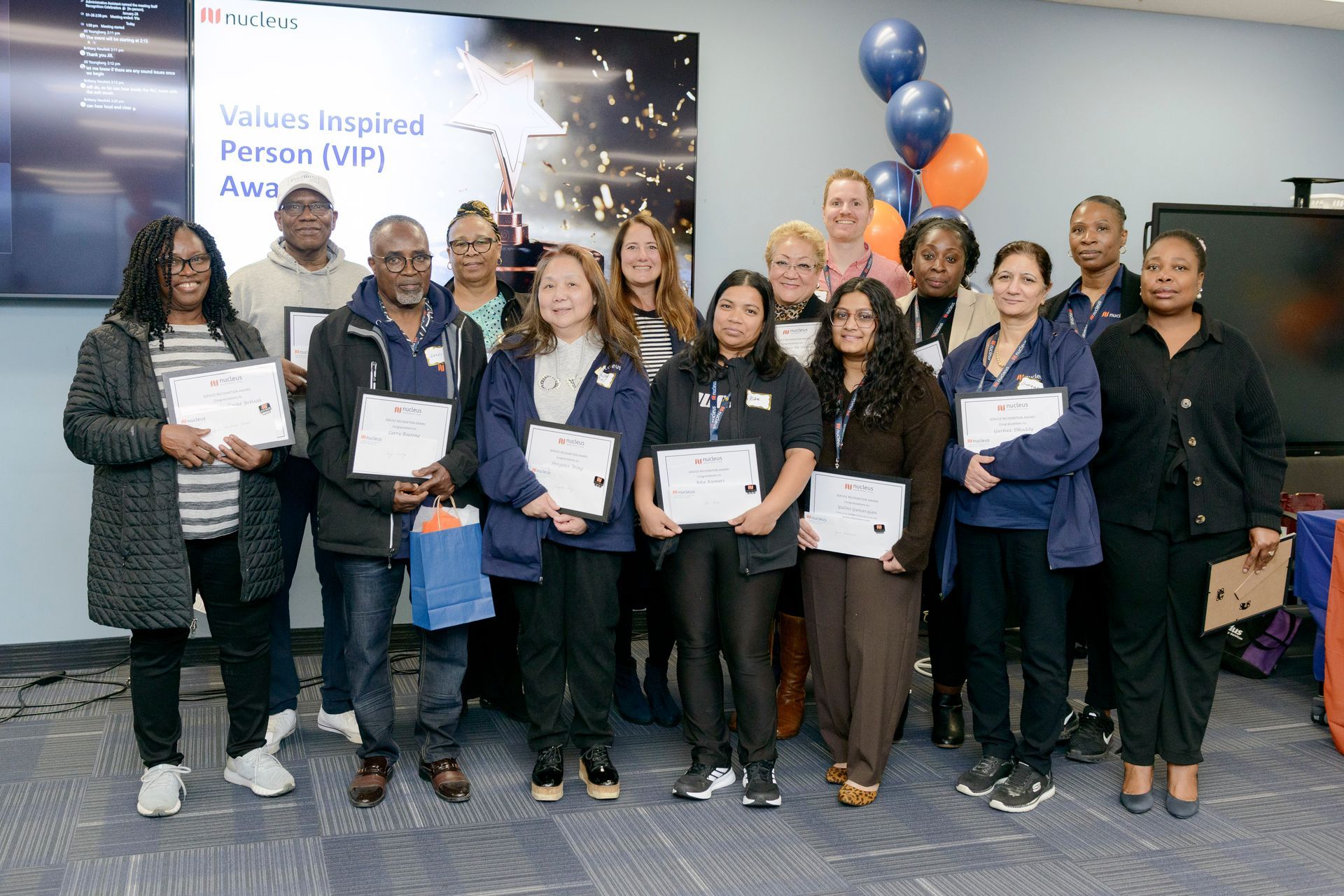
Group of people holding certificates at a workplace celebration with blue and orange balloons
May 27, 2026
Workplace of Choice: Celebrating Our People and Strengthening Our Culture
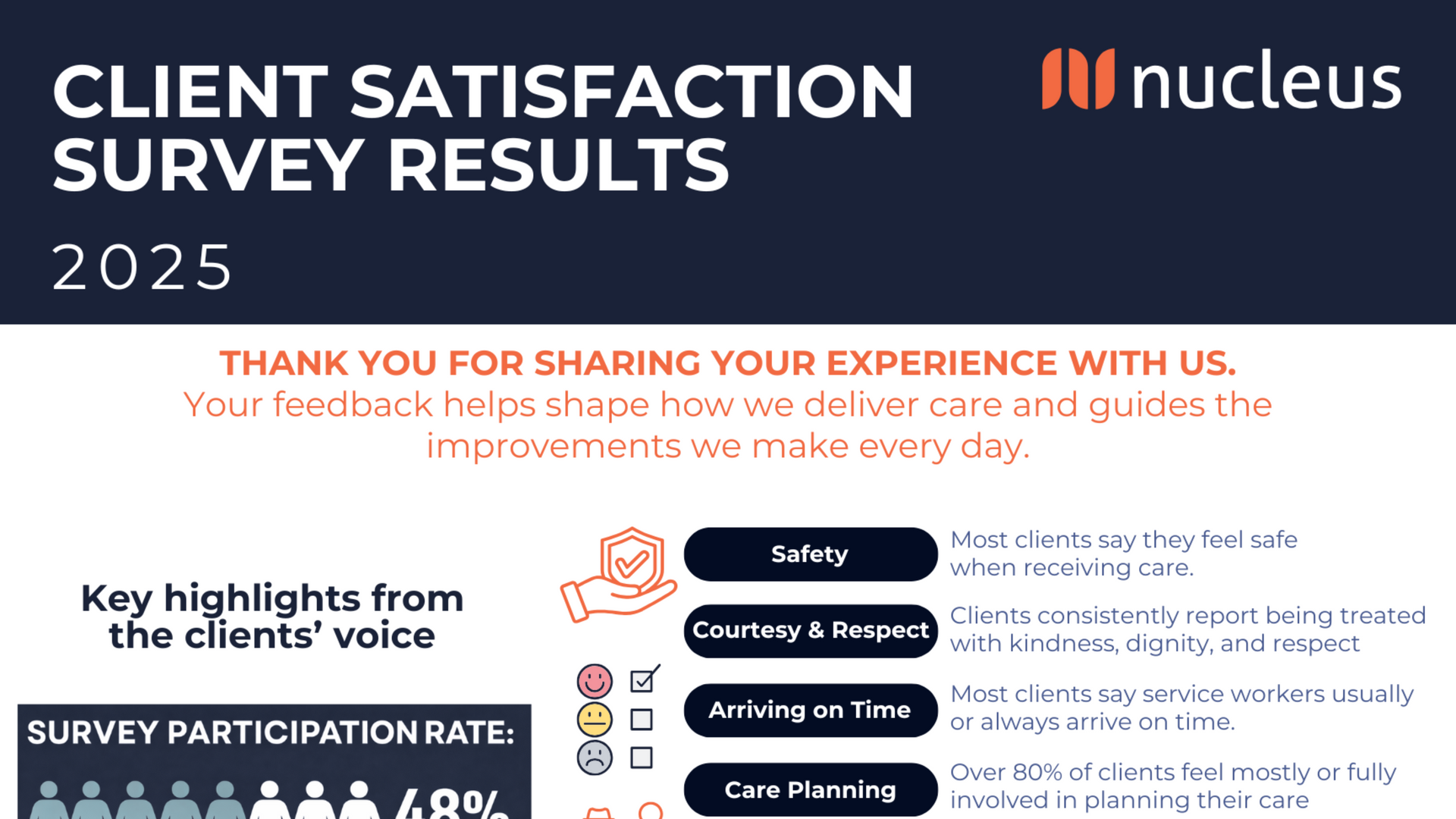
Client satisfaction survey results 2025 infographic with key highlights and participation rate
March 25, 2026
Your Voice in Action
Group of smiling colleagues posing in an office, with blue balloons and conference room doors in the background
March 9, 2026
Reimagining community and care, together
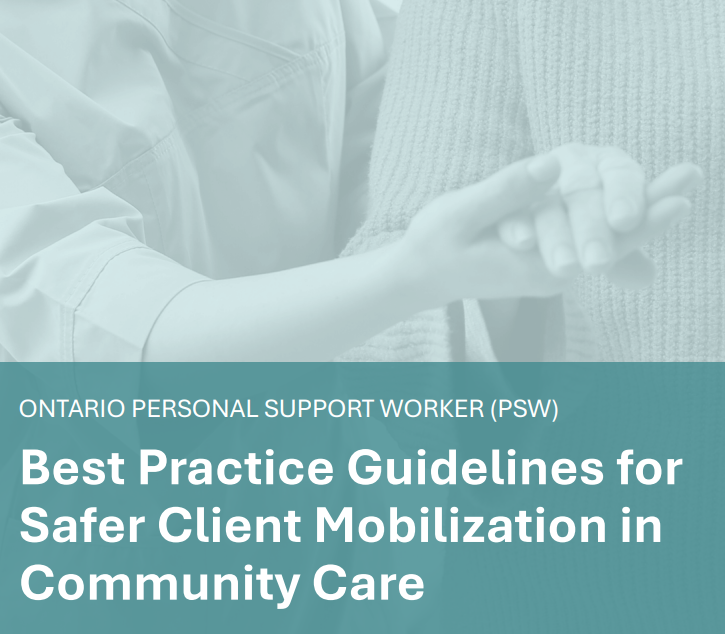
Ontario PSW guide cover with hands helping a person mobilize, teal text on a light background
January 23, 2026
January 19, 2026, marked the release of the Ontario Personal Support Worker: Best Practice Guidelines for Safer Client Mobilization in Community Care.
Gold
August 5, 2025
At Nucleus, quality is not just a standard—it’s our culture.
Show More