
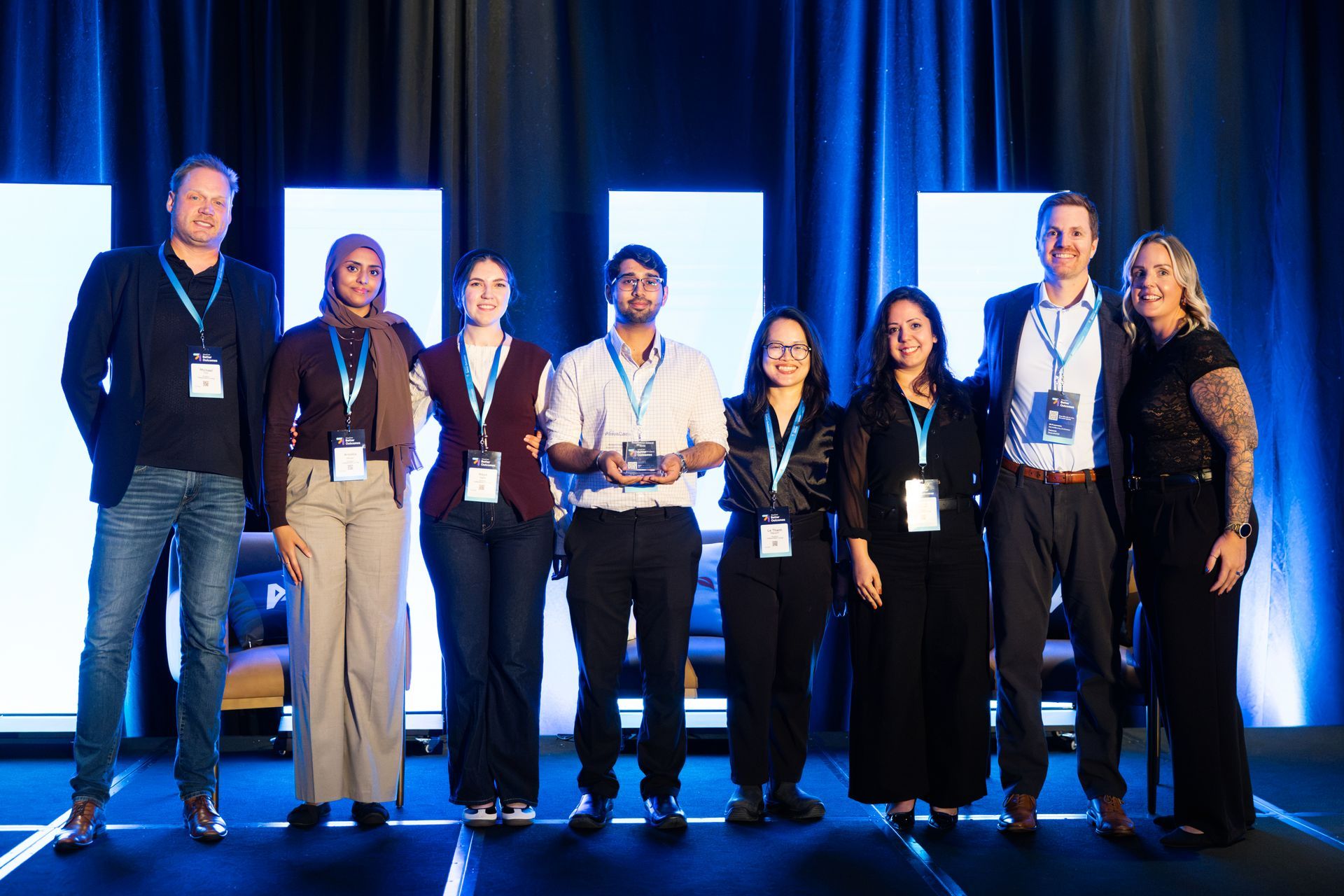
Over the past four years, Nucleus has moved from using digital systems mainly as administrative tools to using them as part of daily decision-making, service oversight, communication and organizational planning. The shift is not about the tools themselves. It is about how the tools are embedded into operations. “Nucleus has been investing in staff digital literacy, process redesign and change management, recognizing that digital transformation is as much about people and culture as it is about technology. This thoughtful, practical approach positions Nucleus not just to adapt to system changes, but to help shape them,” shared Lori Holloway, CEO, Ontario Community Support Association. “The fundamental change is that Nucleus has shifted from reactive, manual and system-dependent work toward a more proactive, datainformed, digitally enabled operating model. Teams can now monitor and respond to issues – double-booked shifts, scheduling gaps, service-code exceptions, before they become larger problems.” - Shiva Vosoughi, Lead of Digital Health & Privacy A few examples from this year tell the story. 1. The Integrated Decision Support (IDS) platform: administered by the Ontario Hospital Association, gives Nucleus the ability to link internal records with regional data, including hospital admissions and emergency department visits. The result is a sharper picture of clients’ health system journeys and an ability to identify risk earlier. 2. Department-specific dashboards: give frontline managers real-time access to operational and quality indicators. Care Team Leads, Care Coordinators and managers now use data to support attendant performance review, Hospital to Home journey monitoring, scheduling oversight and operational issue identification, moving from reactive problem-solving to proactive operational management. 3. Service code data entry accuracy was sustained at less than 1% error throughout fiscal year 2025- 2026, with an average error rate of approximately 0.17%. It reflects data quality monitoring, staff accountability and operational checkpoints working in concert. 4 . Family Portal: Nucleus’ client and family-facing AlayaCare interface, added a major feature on February 23, 2026: clients and families can now access their personalized care plans through the portal app. The launch followed a careful cross-functional planning effort. The feature represents the next phase of Family Portal evolution: clients move from viewing schedules to seeing their own care goals and care planning information directly. 5. Dial My Calls , a new mass communication system, allows Nucleus to deliver pre-recorded, standardized voice messages to clients and staff in inclement weather and other emergencies. Expanded use cases are being explored. 6 . Custom applications and integrated data: Nucleus has built its own applications and linked previously siloed systems - incident reporting, finance, human resources, scheduling and hospital data - into a single picture spanning client assessments, service utilization and acute-care use. The result is a clear line of sight from frontline service to system-level outcomes like avoidable hospital visits and alternate-level-of-care days, and the ability to map a client's journey before and after Nucleus to advocate for funding and inform regional service planning. 7. Sandbox Initiative : In partnership with the University of Toronto's Sandbox program - a model that brings real organizational challenges into academic-applied research - Nucleus continued its food-insecurity geo-mapping and Adult Day Service business case work, and went further this year by sharing de-identified data on roughly 4,000 clients with student research teams in statistics and human biology. Their independent analyses found that clients rely on the hospital system less after starting with Nucleus, with the strongest effects among the highest-need clients: unscheduled admissions for clients with mental health conditions fell by roughly 40%, and clients with cardiovascular conditions saw inpatient admissions, readmissions and costs drop by 35–55%. These are exploratory analyses that describe patterns rather than prove causation, but they offer external, data-grounded support for what Nucleus sees in practice - that home- and community-based care keeps people healthier at home and eases pressure on acute care. For Nucleus, building a scalable digital health ecosystem means connecting people, processes, and information in ways that strengthen care today and create capacity for tomorrow. By pairing practical technology with staff expertise, strong partnerships, and a commitment to continuous improvement, Nucleus is turning data into action - helping clients remain healthier at home while contributing to a more responsive and sustainable health system.
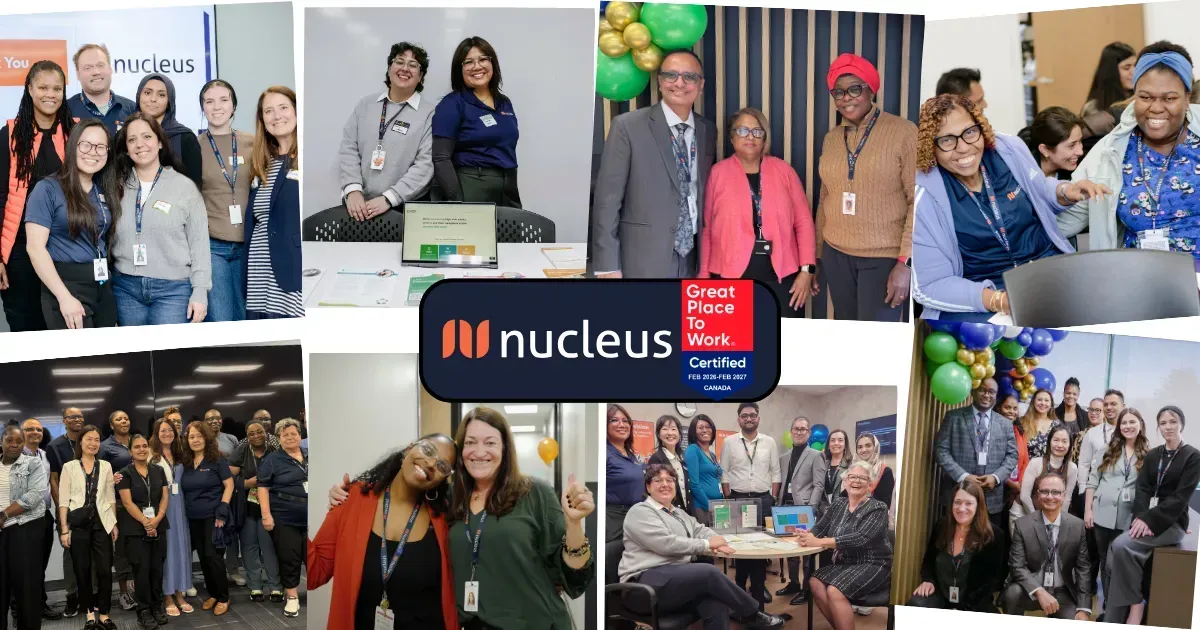
The Nucleus Journey Toward Becoming a Great Place to Work

Workplace of Choice: Celebrating Our People and Strengthening Our Culture
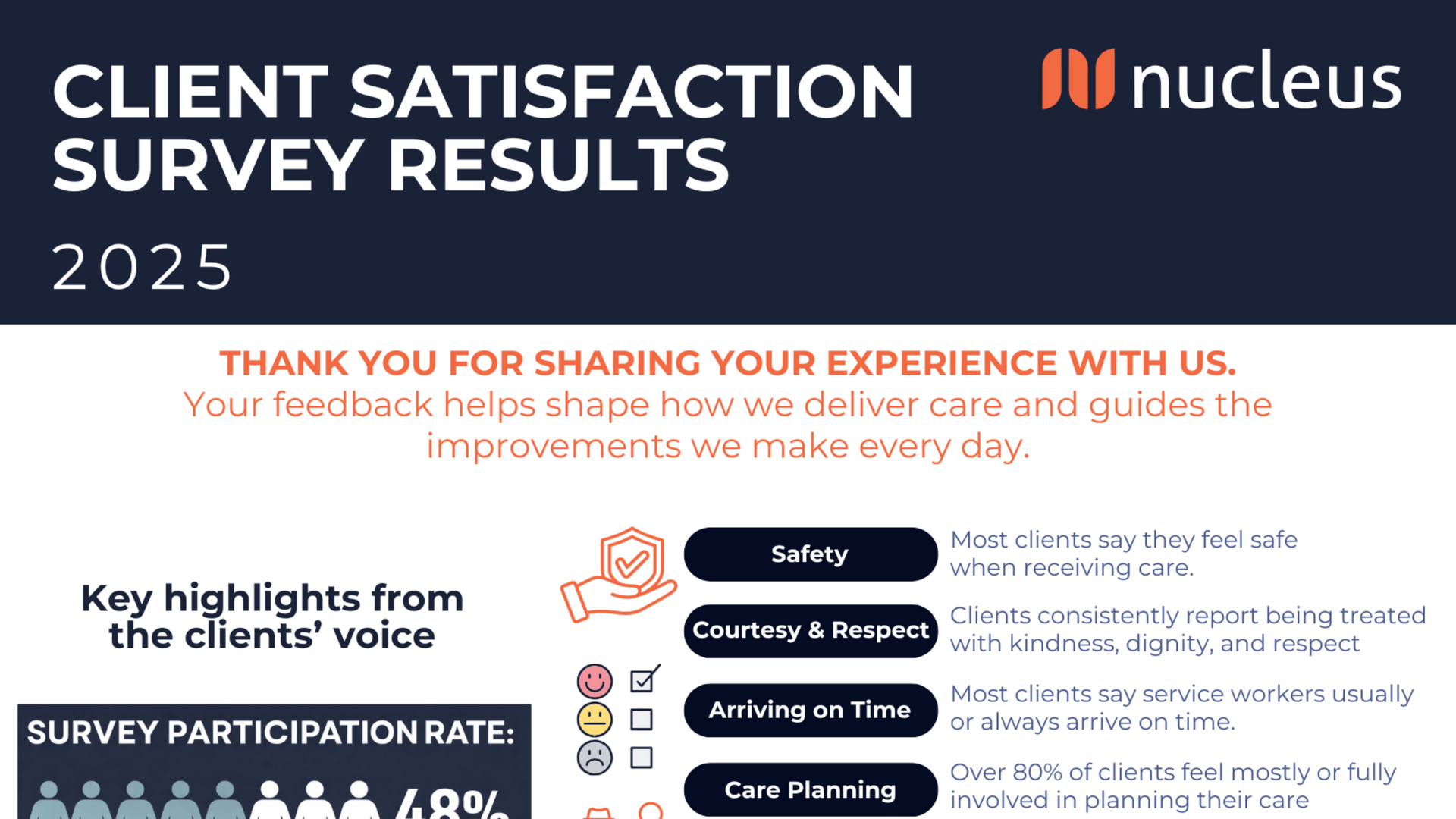
Your Voice in Action
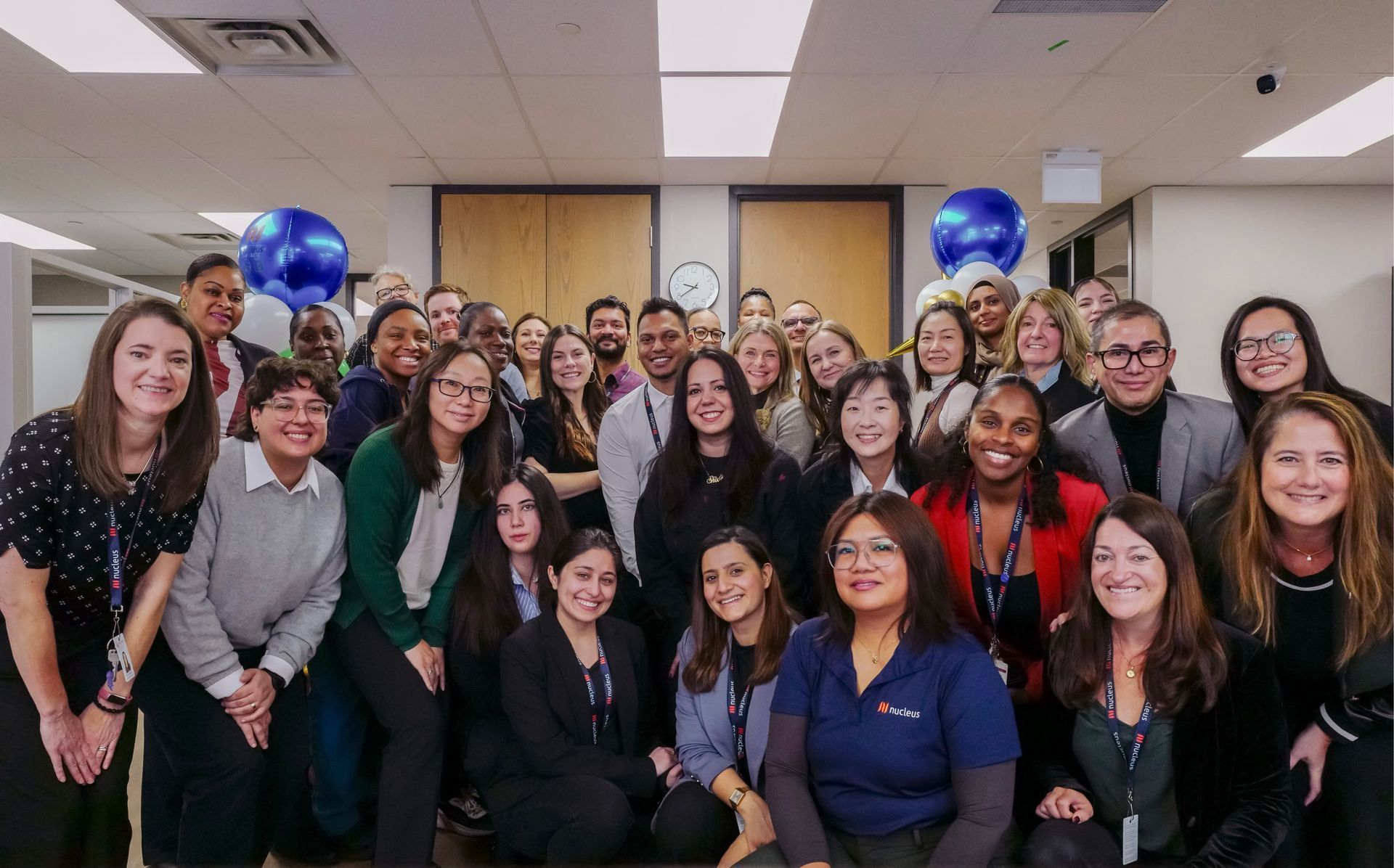
Reimagining community and care, together
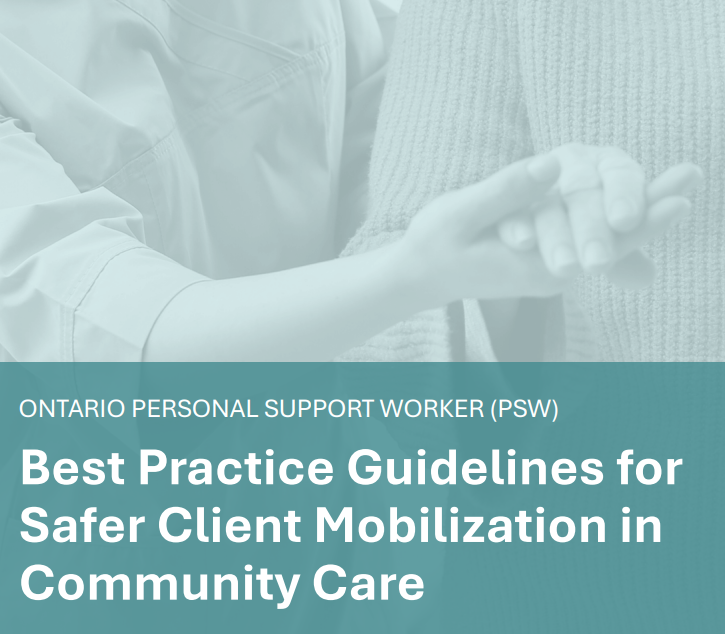
January 19, 2026, marked the release of the Ontario Personal Support Worker: Best Practice Guidelines for Safer Client Mobilization in Community Care.