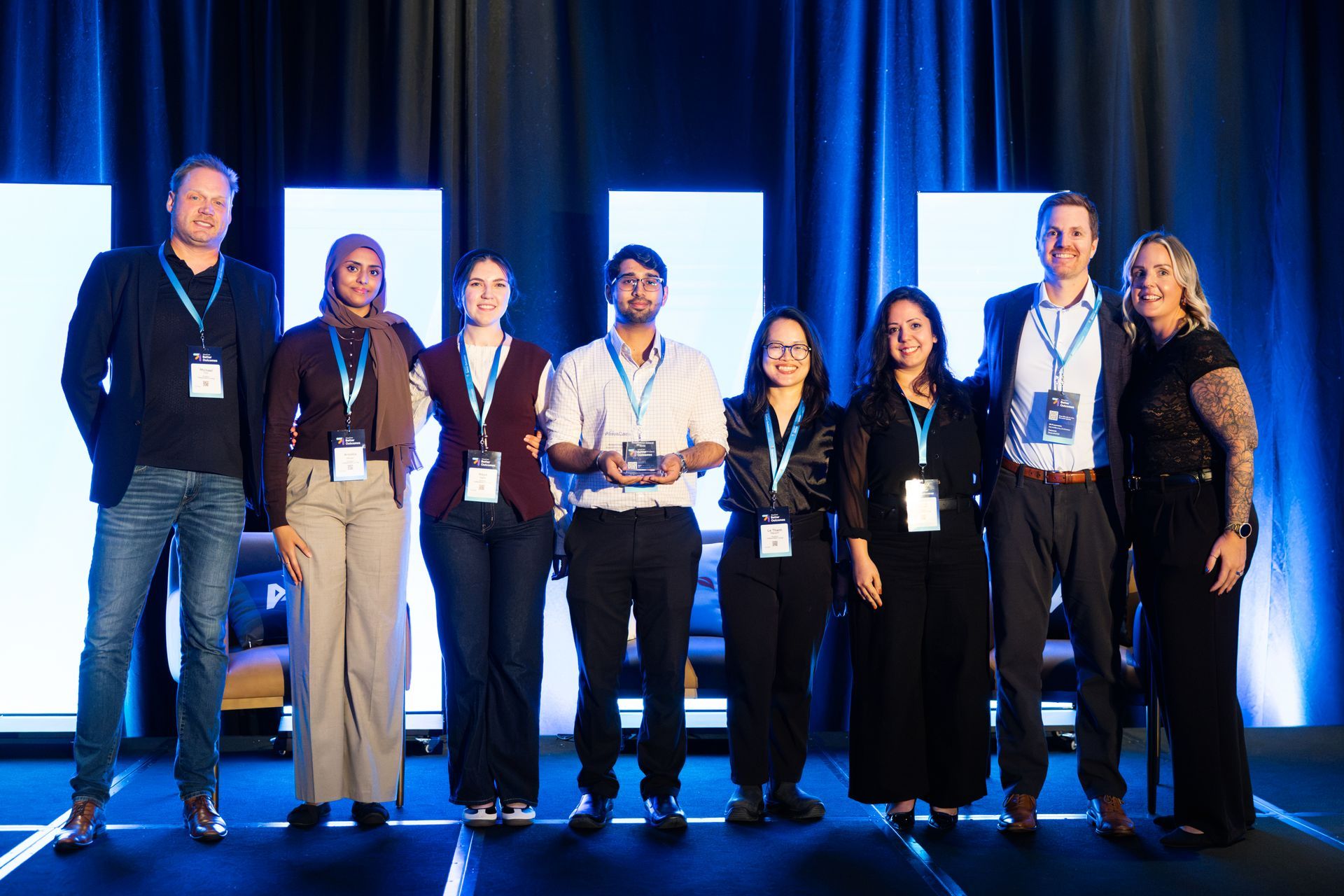
Q&A: Getting to Know Laura Salisbury, CEO

Date:

October 14, 2022

Share

Learn more about Laura and her metaphor (and deep passion!) on life and work that helps her lead #TeamNucleus. 

Laura Salisbury is an authentic, strategic and collaborative leader with a deep understanding of the health system in Ontario (having worked in every sector over the past two decades). Laura is a passionate, systems-thinker who empowers others and works collaboratively to create a culture of continuous improvement, while keeping clients at the centre of all decisions. Prior to joining Nucleus in 2020, Laura was the Director, Health System Performance, Funding and Contract Management with Ontario Health, where she and her team collaborated with system partners for the effective and sustainable implementation of many strategic initiatives.  


TELL US ABOUT YOURSELF

I was born in Toronto and moved to Calgary when I was 5. I went to 4 different elementary schools and 3 different high schools. In short – I grew up in a lot of different places! I think that experience really shaped me to be extremely curious, open-minded and welcoming to change. My dad owned some businesses, and I hung around his restaurants, helping in the kitchen or providing the entertainment by playing the accordion. Managing my dad’s businesses was my first experience with “keeping the books.” 


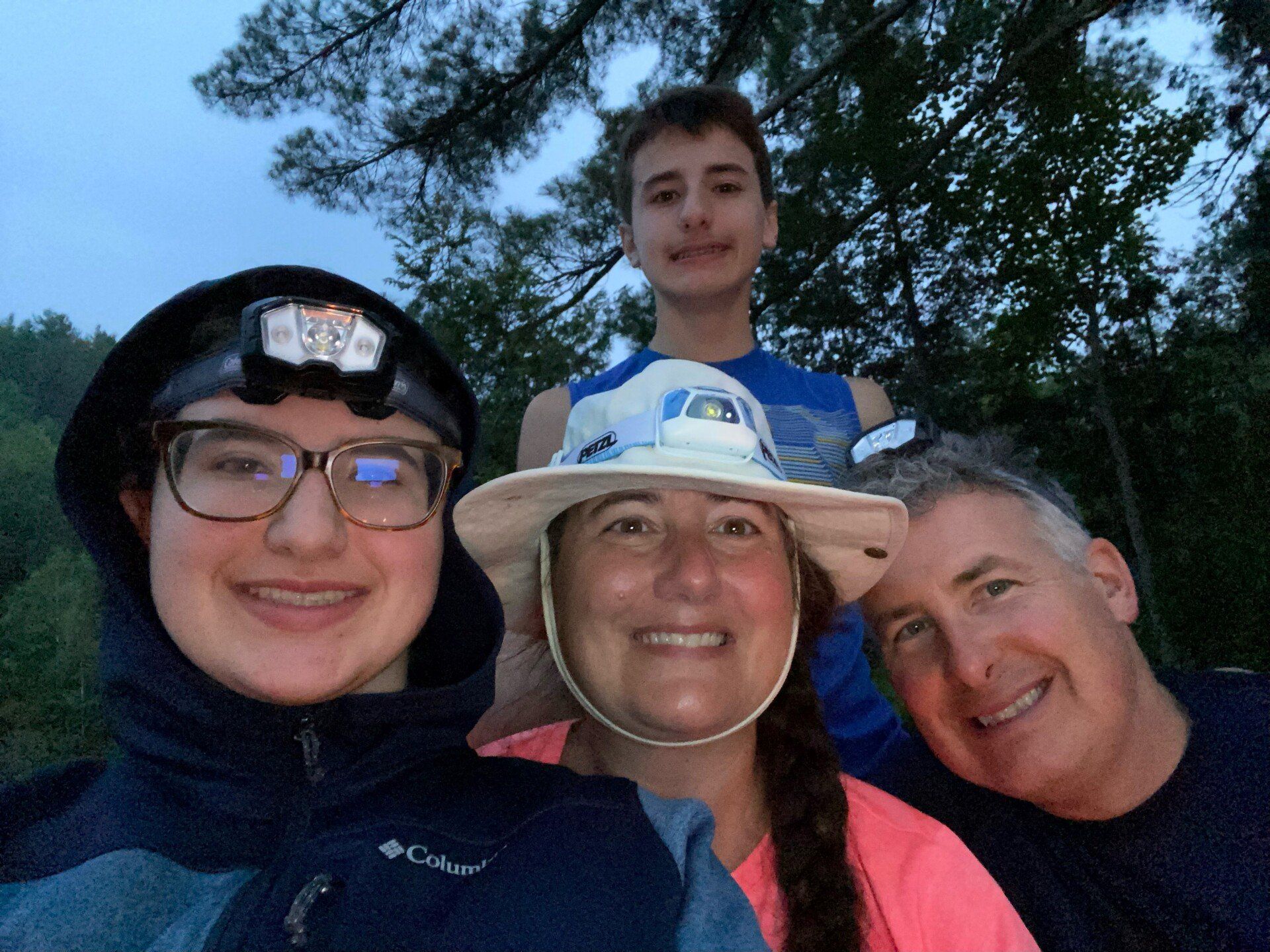
Most of my spare time is spent with my family – my two kids and husband. In the winter, you’ll find us in hockey arenas or skiing and in the summer, we love to camp, hike, bike ride, or swim – sometimes all in the same day! I come from a big and wonderful Italian family so spending time with them – eating my mom and dad’s homemade everything! and just being together is incredibly important to me. COVID was a very difficult time for so many reasons, but for me that was one of the hardest things.

HOW WOULD YOU DESCRIBE YOUR LEADERSHIP STYLE?

I have an active imagination, and generally challenge the status quo on all fronts. I LOVE thinking outside the box, and figuring out new (and easier, I hope) ways of doing things. I try to foster a high trust environment where we can challenge each other in a respectful way that amalgamates various ideas, perspectives and questions. It is important that our team understands the “why” behind decisions, and feels a part of those decisions, to help us grow and learn together.

I am also really passionate about all things Mount Everest. I closely follow the summit teams every May/June – reading their posts/blogs and truly just try to visualize vicariously what they must be doing to prepare for the climb, and as important, the descent. It’s riveting to me! I view climbing as the metaphor for my leadership style. It’s about the journey for me and what you learn from that, adjusting constantly for changing circumstances, making sure the steps we take are solid – and that is what I am trying to bring to Nucleus - to work with high integrity, be kind and have a team that is highly accountable to each other. There’s going to be rainy days, you don’t always summit, you sometimes have to tie yourself to someone else so you don’t fall off, but you also achieve things you only imagined and celebrate the wins together because that’s how you got there.


WHAT BROUGHT YOU TO NUCLEUS?

Having worked at the health system level for over a decade, I was ready to get back to making a difference at the source and to try and make a positive impact for the clients and staff in the community where I live.

Nucleus was always an organization that stood out for me due to its regional programs – Central Registry and the Regional Learning Centre, which I was fortunate enough to be a part of developing when I was at the LHIN. The team beyond our 4 walls, our partnerships, are incredibly important to me. I want to do better work together and know these regional programs are a step in the right direction towards that goal of serving our community residents, as we all evolve in our new world.


WHAT MAKES THIS ORGANIZATION SO SPECIAL?

I’m really lucky to be surrounded by talented leaders who care deeply about their work, the staff and our clients. From a management perspective, it’s a relatively small team so to make us effective, people really have to roll up their sleeves and support one another. 


I am also in awe of the sheer number of front-line staff who have been with Nucleus for over a decade and continue to be so passionate about delivering exceptional care every day.


Nucleus as an organization plays a very unique role in the health system in that our Supports for Daily Living program helps alleviate hospital strain as we expedite discharges and bring people onto service very quickly, which is unusual. Most community organizations accept referrals when they have space. We’re designed to accept referrals at any time and get care in as quickly as possible. Our team really is amazing!


I think we’re also known for our strategic system leadership by the tables we get invited to. Nucleus is known to be solution oriented and very results driven. We’re willing to put our skin in the game and just figure it out.

WHAT'S NEXT FOR NUCLEUS?

So many things! Up until this point, we have been heavily focused on rebuilding ourselves from the inside out – evolving us into a high performing organization with the best people, systems and processes to help us achieve that. I am excited about all the work that is continuing to unfold in our operational reset, and to really empower staff at all levels for nimble decision making and solutioning.


I’m also really excited about our modernization strategy, which will enable client’s to be more involved and responsible for driving communication which I believe will result in better client experiences. 


We also know that COVID is still very much here. I want to continue to keep our staff safe. 


WHAT HAVE YOU LEARNED FROM COVID? 

You cannot underestimate the importance of a small and mighty team when faced with enormous obstacles in a high-stress environment. It’s a time when you are forced to push eachother, but to also have one another’s backs.


Immediately after I started, I learned about so many opportunities to improve both the staff and client experience. What COVID really showed me is that you can’t push through everything on your agenda. You must keep a level of stability, which is tricky in an environment when you want to encourage continuous PDSA.


Seeing where we’re at now and how much we had to learn in such a short amount of time, I believe the team knows we can – and are – aggressively tackling our challenges that had to wait on the sidelines due to having our hands tied during COVID.
 

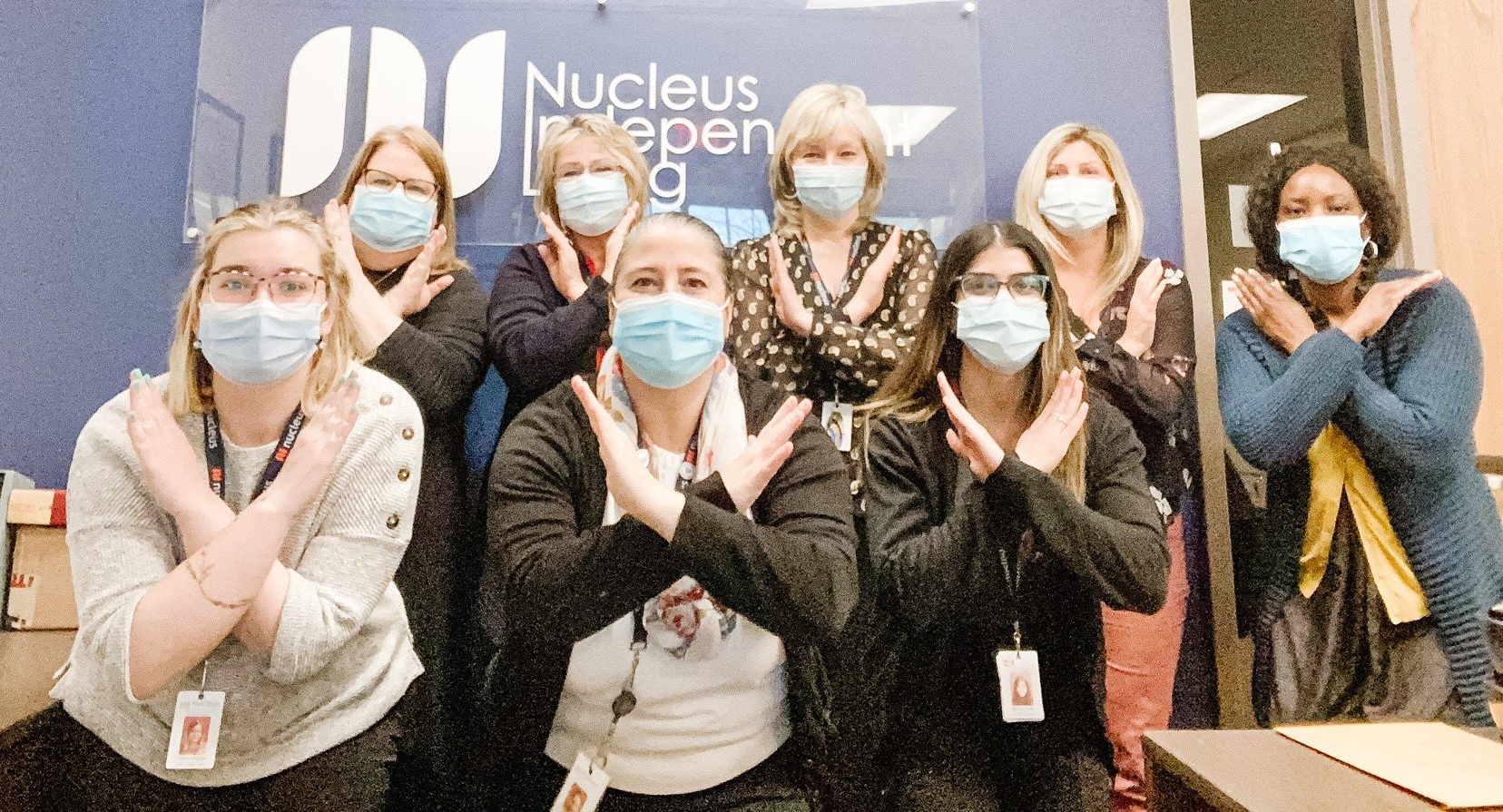
I am thankful that all that focus was impactful to families and caregivers – that our doors remained open and that our IPAC practices were as strong as they were which resulted in zero cases of transmission. The innovative work that was achieved during the depths of those waves has made us a much stronger team.

WHAT EXCITES YOU?

Slowly tackling everything that has been growing on my to-do list since 2020!!


I am very much looking forward to implementing our family portal that will connect clients and caregivers in a much more meaningful way to Nucleus staff.


I am hopeful to understand the capability in our scheduling optimization. Scheduling continues to be a challenge across the health system, especially in a mobile community-based workforce. We have been entrenched in scheduling since my first day as CEO – doing deep QI work and assembling the best resources in the most fiscally responsible way through a partnership with researchers from the University of Ottawa. With their support, we are developing solutions to scheduling that may be able to benefit others in the sector, which is very rewarding to me.


Given the health human resources pressures, I look forward to developing and trialing new models of care to serve our existing clients better, and expand to serve other clients in our community. I want Nucleus to be the employer of choice in the region through better jobs and working creatively to see what that could look like for people and clients.


I am also excited about our equity, diversity and inclusion work that we have just started to heavily focus on this summer. I want to bring more awareness to our staff about the unconscious bias we all carry and to establish ways to break the cycle of misunderstanding, misconception and misrepresentation of all those we serve and work with.

I am so appreciative of each and every one of our Board of Directors. They have been very invested partners in our transformation journey. They are truly exceptional!

Thanks Laura! It sounds like Nucleus is moving onwards and upwards, having already proven to scale some pretty big obstacles together. It will be exciting to learn what the organization does next.

More Perspectives

October 23, 2026
Over the past four years, Nucleus has moved from using digital systems mainly as administrative tools to using them as part of daily decision-making, service oversight, communication and organizational planning. The shift is not about the tools themselves. It is about how the tools are embedded into operations. “Nucleus has been investing in staff digital literacy, process redesign and change management, recognizing that digital transformation is as much about people and culture as it is about technology. This thoughtful, practical approach positions Nucleus not just to adapt to system changes, but to help shape them,” shared Lori Holloway, CEO, Ontario Community Support Association. “The fundamental change is that Nucleus has shifted from reactive, manual and system-dependent work toward a more proactive, datainformed, digitally enabled operating model. Teams can now monitor and respond to issues – double-booked shifts, scheduling gaps, service-code exceptions, before they become larger problems.” - Shiva Vosoughi, Lead of Digital Health & Privacy A few examples from this year tell the story. 1. The Integrated Decision Support (IDS) platform: administered by the Ontario Hospital Association, gives Nucleus the ability to link internal records with regional data, including hospital admissions and emergency department visits. The result is a sharper picture of clients’ health system journeys and an ability to identify risk earlier. 2. Department-specific dashboards: give frontline managers real-time access to operational and quality indicators. Care Team Leads, Care Coordinators and managers now use data to support attendant performance review, Hospital to Home journey monitoring, scheduling oversight and operational issue identification, moving from reactive problem-solving to proactive operational management. 3. Service code data entry accuracy was sustained at less than 1% error throughout fiscal year 2025- 2026, with an average error rate of approximately 0.17%. It reflects data quality monitoring, staff accountability and operational checkpoints working in concert. 4 . Family Portal: Nucleus’ client and family-facing AlayaCare interface, added a major feature on February 23, 2026: clients and families can now access their personalized care plans through the portal app. The launch followed a careful cross-functional planning effort. The feature represents the next phase of Family Portal evolution: clients move from viewing schedules to seeing their own care goals and care planning information directly. 5. Dial My Calls , a new mass communication system, allows Nucleus to deliver pre-recorded, standardized voice messages to clients and staff in inclement weather and other emergencies. Expanded use cases are being explored. 6 . Custom applications and integrated data: Nucleus has built its own applications and linked previously siloed systems - incident reporting, finance, human resources, scheduling and hospital data - into a single picture spanning client assessments, service utilization and acute-care use. The result is a clear line of sight from frontline service to system-level outcomes like avoidable hospital visits and alternate-level-of-care days, and the ability to map a client's journey before and after Nucleus to advocate for funding and inform regional service planning. 7. Sandbox Initiative : In partnership with the University of Toronto's Sandbox program - a model that brings real organizational challenges into academic-applied research - Nucleus continued its food-insecurity geo-mapping and Adult Day Service business case work, and went further this year by sharing de-identified data on roughly 4,000 clients with student research teams in statistics and human biology. Their independent analyses found that clients rely on the hospital system less after starting with Nucleus, with the strongest effects among the highest-need clients: unscheduled admissions for clients with mental health conditions fell by roughly 40%, and clients with cardiovascular conditions saw inpatient admissions, readmissions and costs drop by 35–55%. These are exploratory analyses that describe patterns rather than prove causation, but they offer external, data-grounded support for what Nucleus sees in practice - that home- and community-based care keeps people healthier at home and eases pressure on acute care. For Nucleus, building a scalable digital health ecosystem means connecting people, processes, and information in ways that strengthen care today and create capacity for tomorrow. By pairing practical technology with staff expertise, strong partnerships, and a commitment to continuous improvement, Nucleus is turning data into action - helping clients remain healthier at home while contributing to a more responsive and sustainable health system.
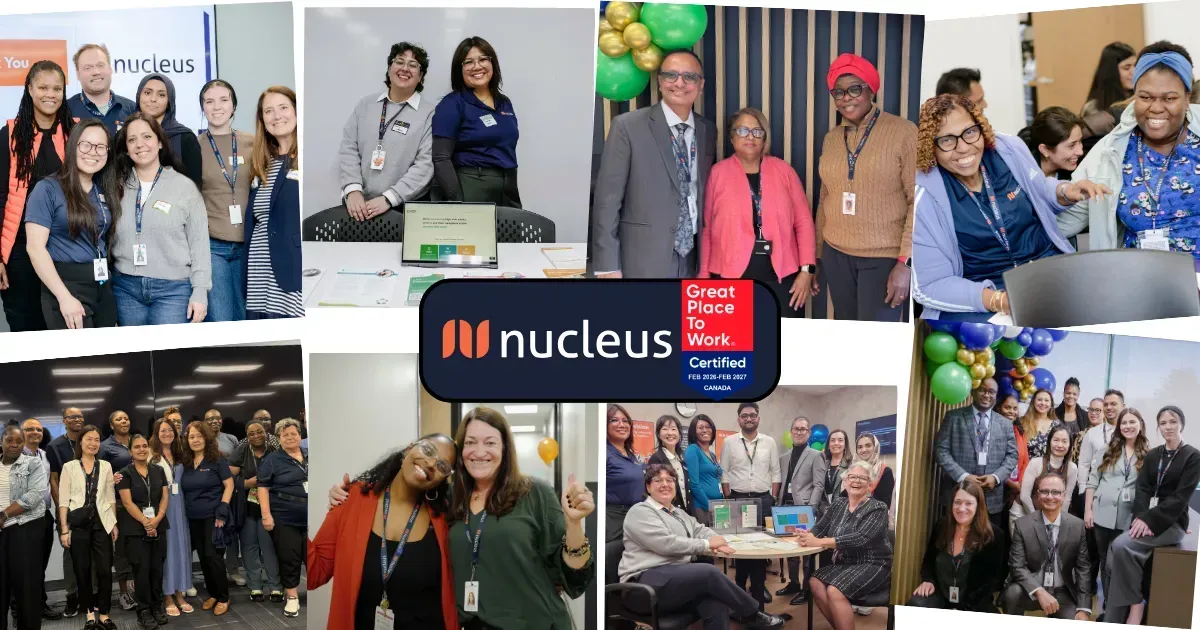
Collage of people at a Nucleus event, with group photos, booth displays, and social moments.
September 30, 2026
The Nucleus Journey Toward Becoming a Great Place to Work
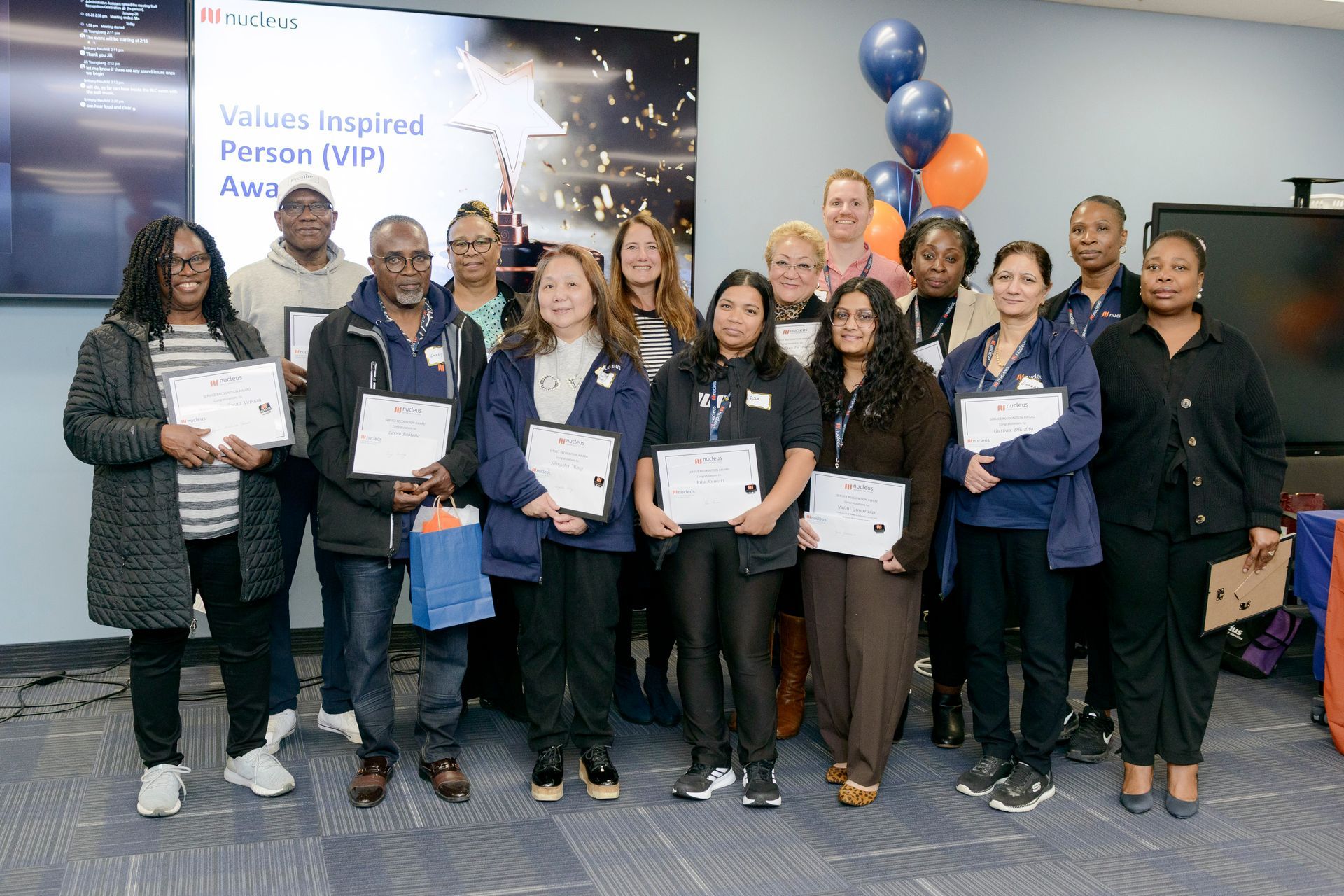
Group of people holding certificates at a workplace celebration with blue and orange balloons
May 27, 2026
Workplace of Choice: Celebrating Our People and Strengthening Our Culture
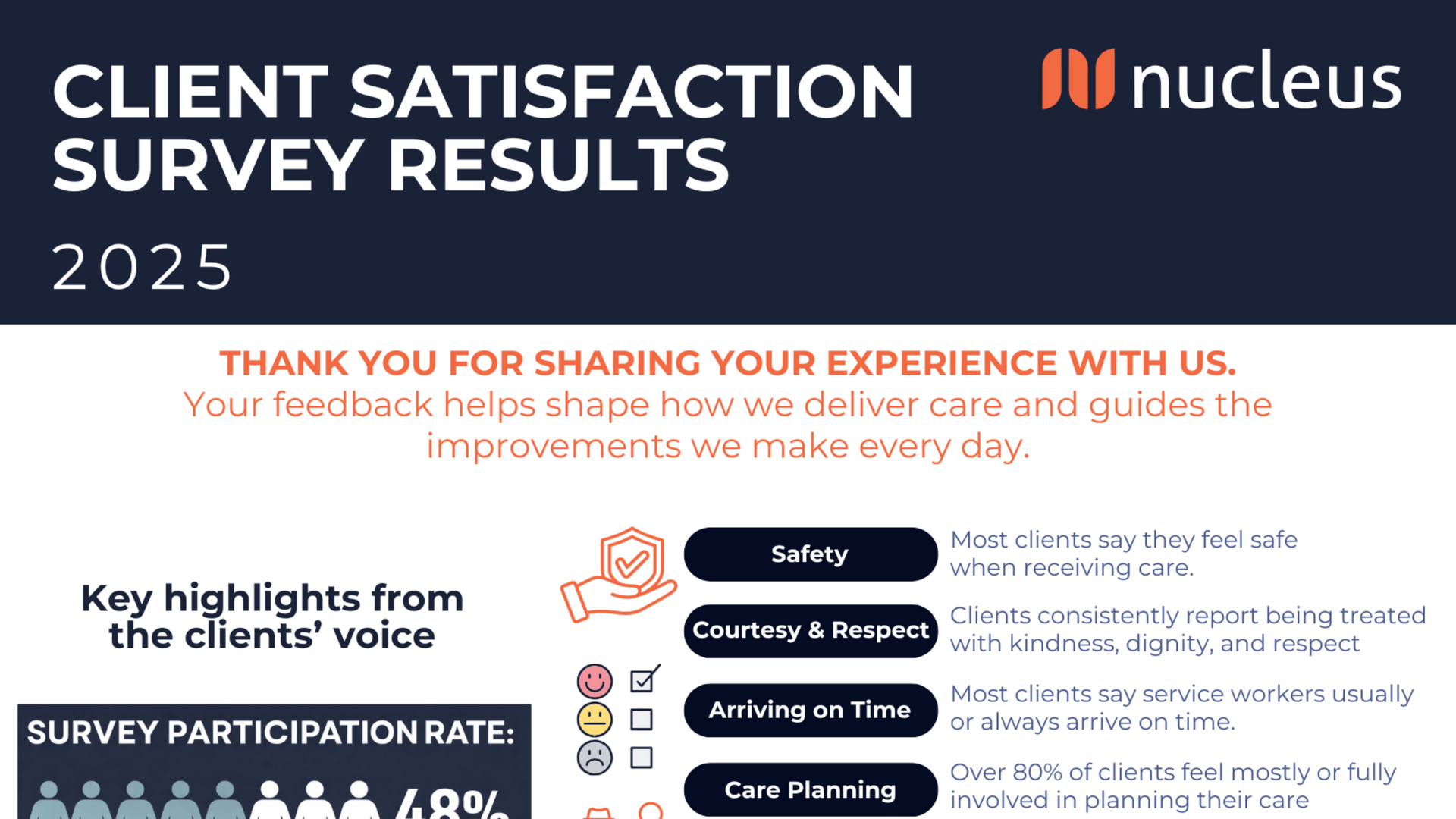
Client satisfaction survey results 2025 infographic with key highlights and participation rate
March 25, 2026
Your Voice in Action
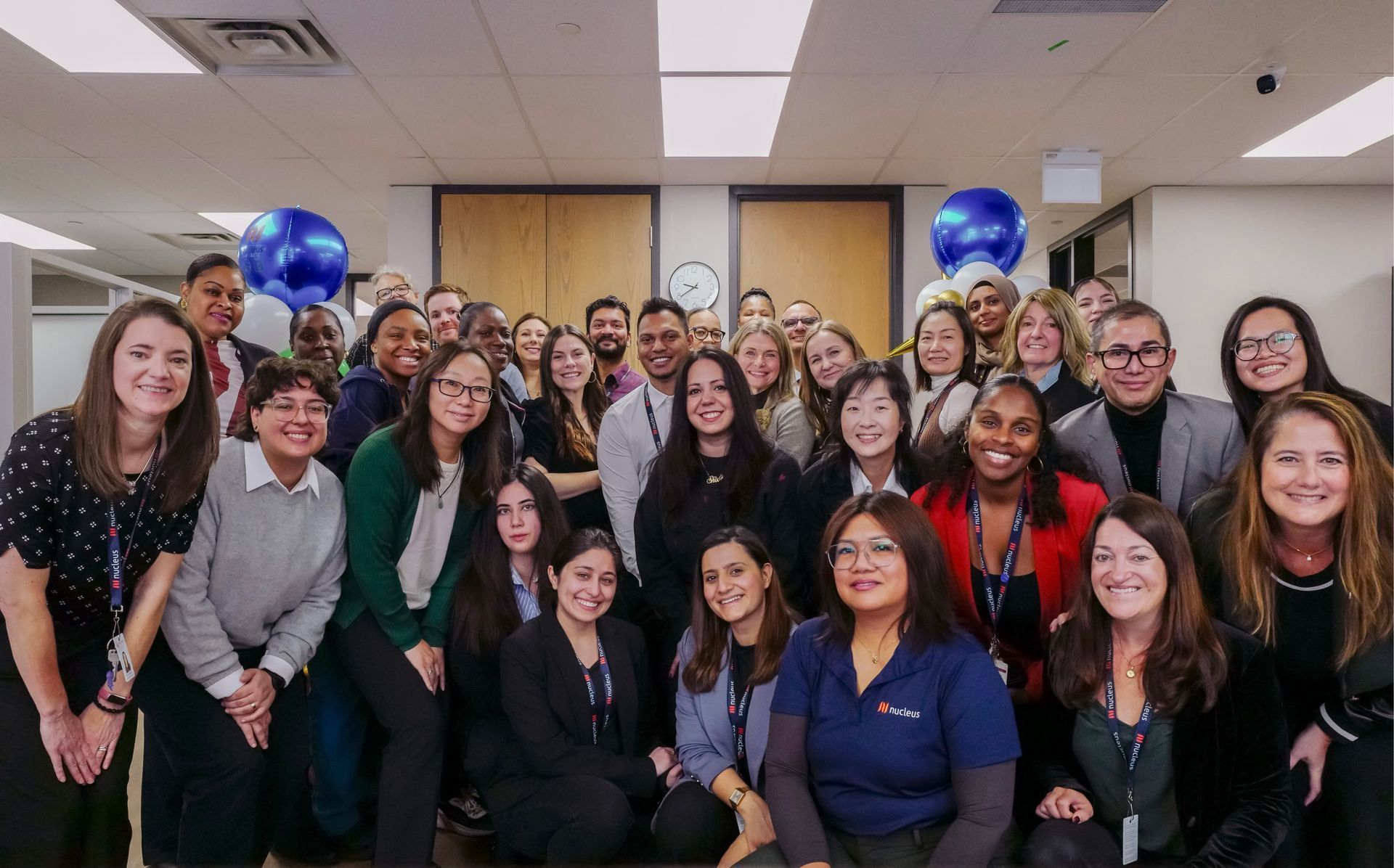
Group of smiling colleagues posing in an office, with blue balloons and conference room doors in the background
March 9, 2026
Reimagining community and care, together
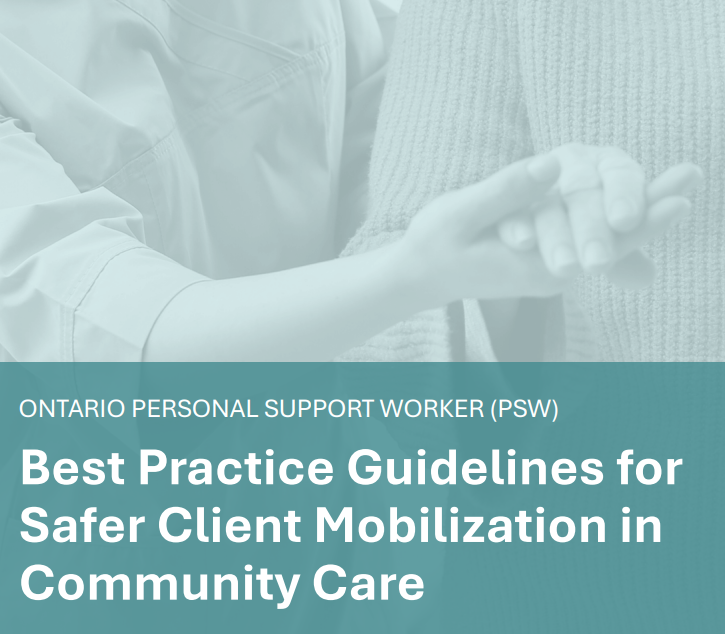
Ontario PSW guide cover with hands helping a person mobilize, teal text on a light background
January 23, 2026
January 19, 2026, marked the release of the Ontario Personal Support Worker: Best Practice Guidelines for Safer Client Mobilization in Community Care.
Show More